research
Our group studies atmospheric turbulence across scales through several closely connected research themes.
Atmospheric boundary-layer processes
Our research examines the structure and scaling of turbulence in canonical atmospheric boundary layers. Topics include similarity theory, the very stable regime, low-level jets, boundary-layer height, and the dissipation rates of velocity and temperature fluctuations.
Atmospheric optics
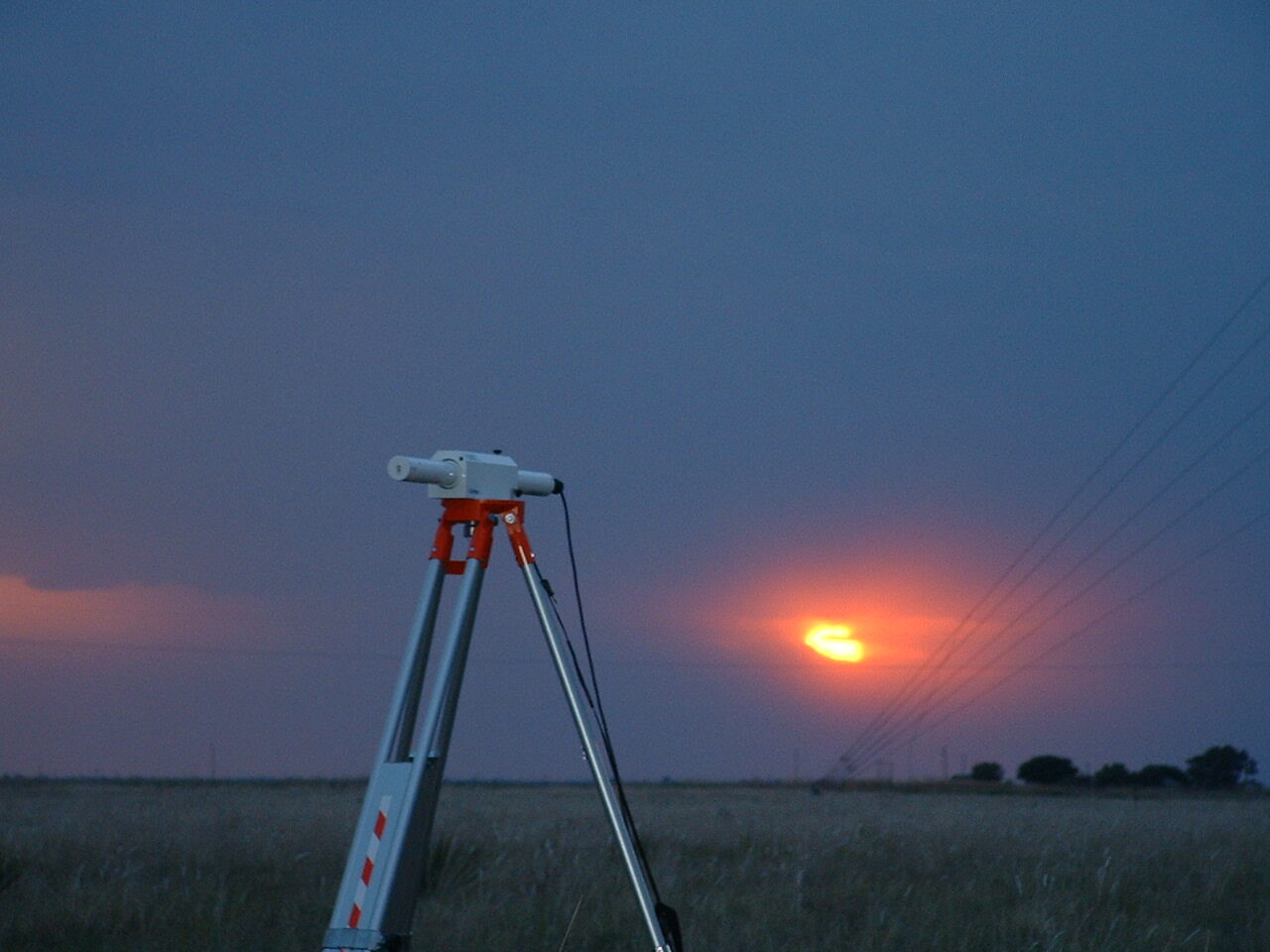
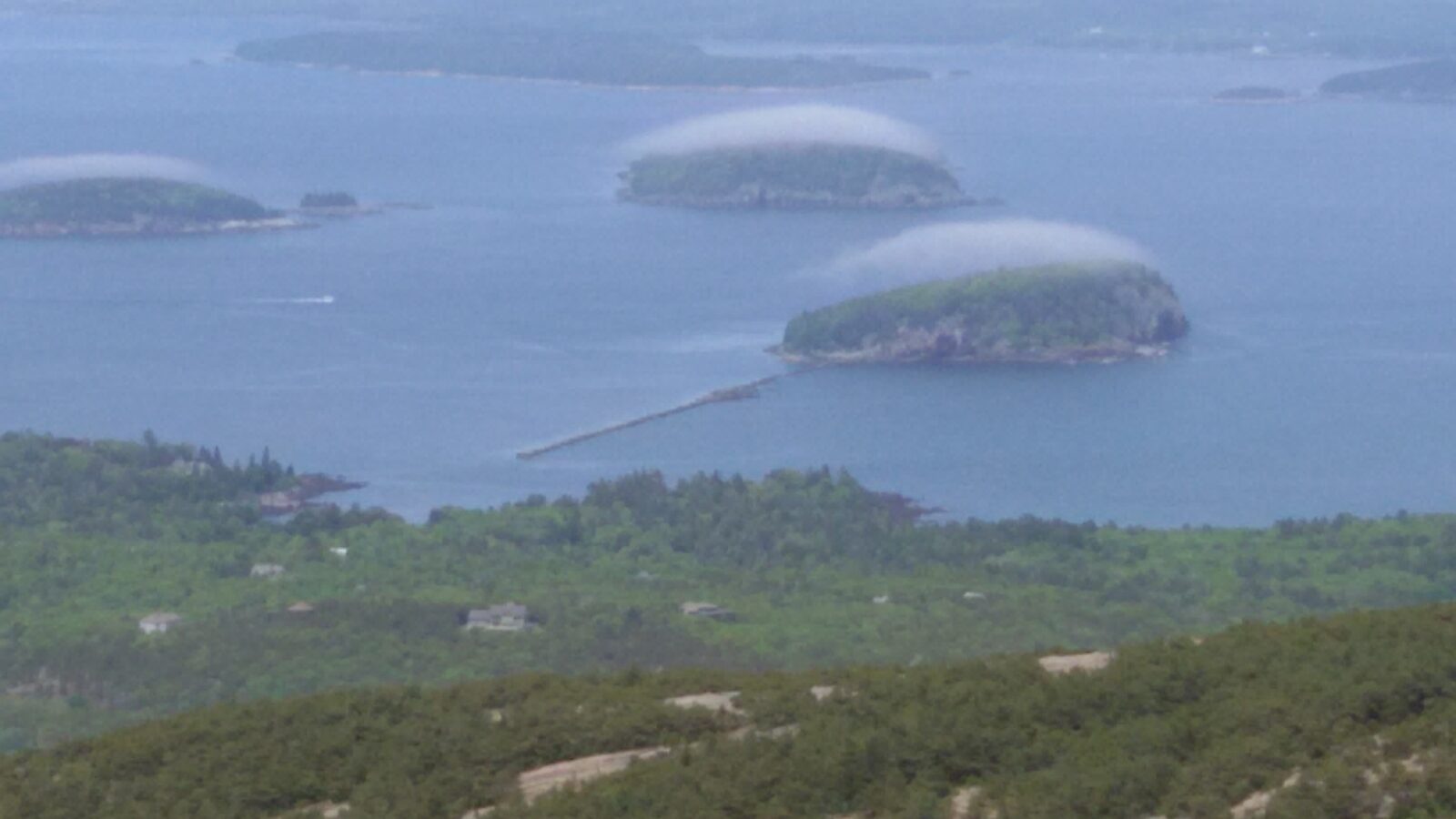
We investigate refractive-index structure parameter ($C_n^2$) and its effects on imaging and laser propagation. This work encompasses physics-based and machine-learned parameterizations, mesoscale prediction of optical turbulence, and ray tracing through refractive structures. We also contribute to NATO SET groups studying atmospheric effects on electro-optical systems.
Large-eddy simulation (LES)
Our work focuses on scale-dependent dynamic subgrid-scale modeling, sensitivity to grid resolution in stable boundary layers, and LES intercomparison. I chaired the third GABLS LES intercomparison and developed JAX-ALFA, an open-source, JAX-based LES framework that runs on CPUs and GPUs.
Numerical weather prediction
We use mesoscale and gray-zone modeling for wind-energy and atmospheric-optics applications. Research topics include low-level jets, coastal and offshore flows, island wakes, downscaling of extreme winds, etc.
Renewable energy
Our renewable-energy research addresses inflow generation for turbine-load analysis, thunderstorm downbursts, wind-power ramps, Dunkelflaute events, offshore wind-resource assessment, and forecasting. We have contributed to the Grand Challenges in Wind Energy and IEA Wind Task 51; for the latter, I co-organized a webinar on deep-learning weather prediction (January 2024).
Machine learning for the Earth sciences
We develop machine learning methods for parameterization, downscaling, nowcasting, and data-driven surrogate modeling. These methods (e.g., gradient boosting machines, convolutional autoencoders, neural operators, and foundation models) are applied to optical turbulence, wind gusts, wind power, and air quality.